
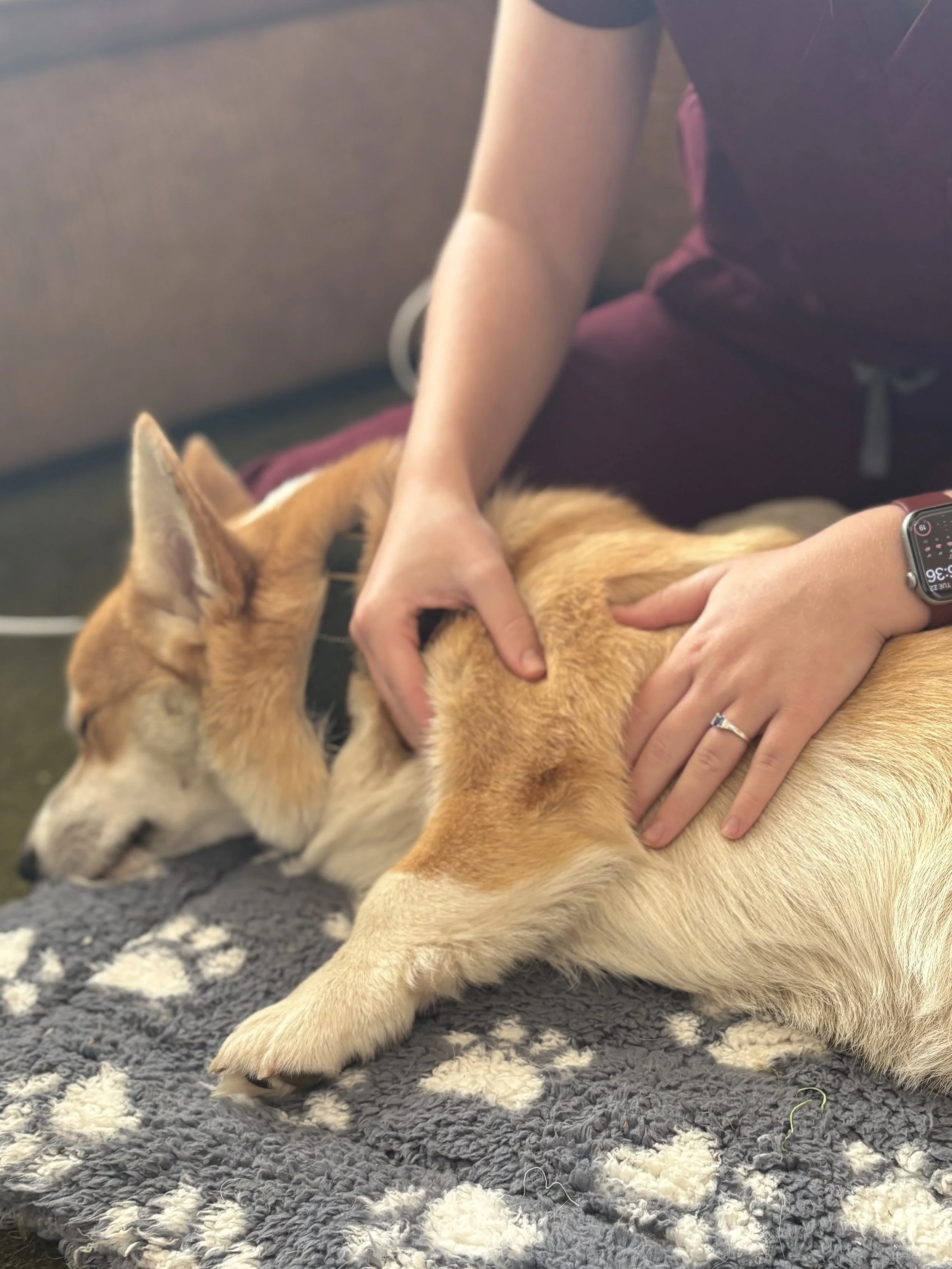
Manual Therapies
We use a range of manual therapy techniques as part of our veterinary physiotherapy and rehabilitation programmes. Treatment is tailored to each individual patient and may include soft tissue massage, joint mobilisation, passive range of motion exercises and stretching.
The Benefits:
Manual therapy is a hands-on treatment approach that can help to improve comfort, mobility and function. It may be used to help reduce muscle tension, improve joint mobility, support circulation and relieve pain.
Manual therapy can be particularly beneficial for patients experiencing muscle tightness, joint stiffness or reduced range of motion. It may also help patients to feel more comfortable following surgery or injury and can complement active rehabilitation exercises.
How it Works:
Manual therapy involves the controlled movement and manipulation of soft tissues and joints to produce specific therapeutic effects.
Soft tissue techniques, such as massage, can be used to influence muscle tension, reduce areas of tightness and improve local circulation. Massage may also help to promote relaxation and reduce discomfort associated with muscular tension.
Joint mobilisation involves gentle, controlled movements applied to a joint within its available range of motion. This can help to maintain or improve joint mobility and reduce stiffness, supporting more comfortable and functional movement.
Passive range of motion exercises involve carefully moving a limb or joint through its available range without the patient actively contracting the muscles. These techniques can help to maintain joint mobility and flexibility, particularly when normal movement is restricted following surgery, injury or neurological conditions.
Stretching techniques may be used to maintain muscle and soft tissue flexibility and help prevent restrictions in movement developing as a result of inactivity or altered movement patterns.
Manual therapy may also have effects on the nervous system, helping to influence pain perception and promote relaxation. By reducing discomfort and improving movement, it can help patients to engage more effectively with their wider rehabilitation programme.
Common Conditions Treated:
Muscle tension and tightness
Muscle, tendon and ligament injuries
Post-operative recovery
Reduced range of motion
Neurological conditions
Chronic musculoskeletal conditions
Pain and discomfort
Reduced mobility
Muscle weakness and compensatory movement patterns